
Your Life Shouldn't Have to Log In
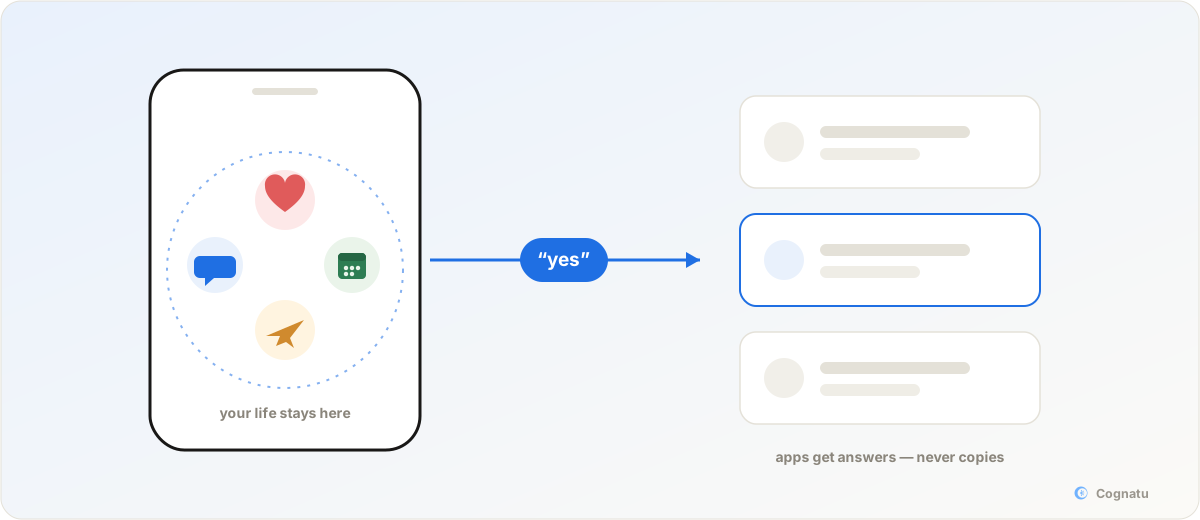
Every time you try a new AI, you start from zero. You explain the diet, the deadlines, the people you work with, the way you like answers. Six months of patient context-building, and a different app makes you a stranger again.
The industry's answer is simple: move your life onto its servers. Personalization, as it's currently sold, is a trade — intimacy for utility.
It doesn't have to be that way. We started Cognatu on the belief that it shouldn't — that software can know about you without holding a copy of you. And one of the clearest signs that this future is coming isn't anything we built. It's a set of pieces Apple has quietly shipped over the last few years.
Three pieces of a bigger idea
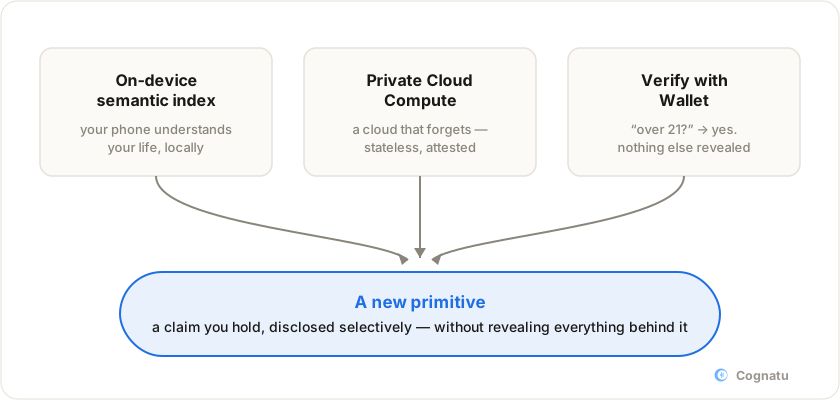
Individually, they look unrelated. There's an on-device semantic index1 that helps Siri understand your messages, mail, photos, and apps without constantly sending everything to the cloud. There's Private Cloud Compute2 — servers built on stateless computation and cryptographic attestation3, for requests too heavy to run on the phone: your device verifies the exact software a server is running against a public transparency log before it will send anything at all. And there's Verify with Wallet4, where an app can ask "are you over 21?" and receive a yes — without learning your birthday, your address, or your licence number.
Most people see that last feature as digital identity. We think it's something more fundamental.
It's a new primitive: a claim you hold, disclosed selectively, without revealing everything behind it.
Nothing says that claim has to be your age.
The Personal Context Vault
Your phone already knows a surprising amount about you — the languages you use, the people you talk to most, the projects you've been working on, the places you travel, the way you write. Today, that understanding exists mostly to make your phone a little more helpful. We think it should become something you own.
Imagine a Personal Context Vault that lives entirely on your device, holding three kinds of information:
- Attributes — language, dietary preferences, accessibility needs, time zone.
- Preferences — concise answers, metric units, never call, morning meetings only.
- Memories — the project you're leading, the trip you're planning, the supplier who let you down.
Encrypted, on-device, synced only across hardware you own.
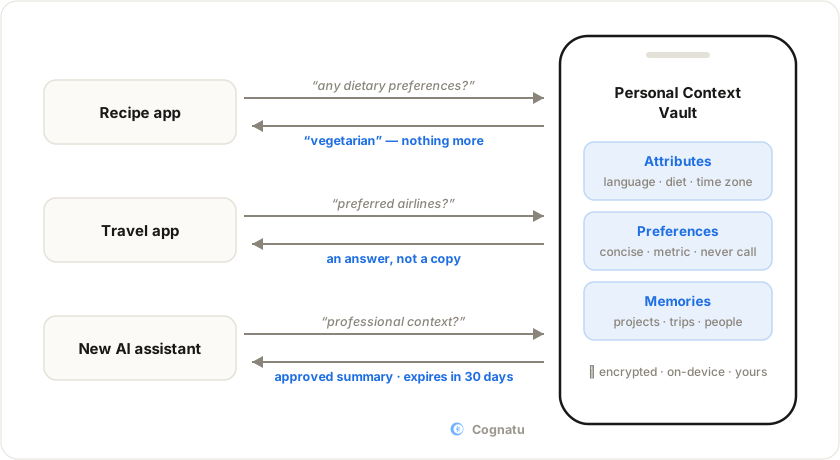
Now flip the relationship between apps and your data. Instead of asking for access to everything, apps ask your phone questions. A recipe app asks about dietary preferences, and your phone answers. A travel app asks about preferred airlines, and your phone answers. A new AI assistant asks for your professional context, and your phone composes a temporary summary on-device, lets you review it, shares only what you approve, and expires it thirty days later.
Four rules
If this system existed, it should follow four rules.
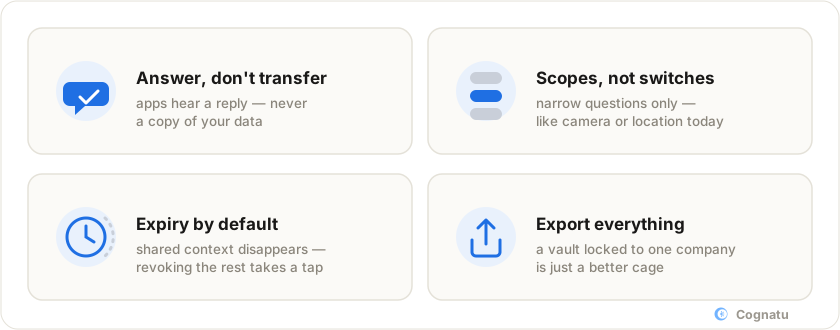
Answer, don't transfer. Apps receive answers, not copies of your personal data.
Scopes, not switches. Just as apps request location or camera access today, they request narrowly defined pieces of context — and nothing more.
Expiry by default, revocation on demand. Shared context disappears unless you renew it, and one screen in Settings shows everyone who holds a grant right now. Revoking any of them takes a tap.
Export everything. A vault that only works inside one ecosystem is just a better cage.
The goal isn't to make any company the owner of your digital life. It's to make you the owner.
Why doesn't this exist already?
Not because it's technically hard. It doesn't exist because nearly every AI company's business model depends on being the one that holds your data. Your accumulated context is the moat — the reason you can't leave. A vault that answers questions and expires grants is, from that point of view, a product designed to destroy the industry's favourite lock-in.
A company that sells hardware, not data, could build the consumer version of this. Apple is closer than anyone. But the primitive doesn't have to wait for Apple, and it doesn't only belong on a phone — it belongs everywhere software currently demands a copy of you and could make do with an answer.
To be honest about the limits: memories go stale — you change jobs, diets, cities — so any vault needs easy correction, not just easy storage. And even careful answers reveal things; "no milk, no sugar" says something about you that was never explicitly stored. Selective disclosure protects the record, not every inference. These are real problems. They're also far smaller than the ones we currently accept.
A different future
Imagine buying a new phone in 2029 — from any company. You export your vault, import it, and your assistant knows how you work on the first question.
A week later, you try a different AI service. Instead of spending months teaching it who you are, you lend it your professional context for a week. The permission expires, and nothing about you remains — not because you trust the company's deletion policy, but because it never possessed the underlying data in the first place.
That's a very different relationship between people and software. Not "we protect your data" — every platform says that. Something much harder to fake:
Your life stays in your pocket. Platforms receive answers instead of copies.
Apple has already built most of the consumer foundation: an on-device understanding of your life, a cloud that forgets2, and a protocol for selective disclosure. The rest of it belongs to the layer no phone-maker will ever touch — the software your pocket talks to. That's the problem we think about every day. What's missing isn't the technology. It's more of the industry deciding to point it at the same problem.
Sources
- Apple Newsroom — Apple introduces Siri AI — apple.com/newsroom
- Apple Security Research — Private Cloud Compute: A new frontier for AI privacy in the cloud — security.apple.com/blog/private-cloud-compute
- Apple Security Research — Security research on Private Cloud Compute — security.apple.com/blog/pcc-security-research
- Apple Developer — Get started with the Verify with Wallet API — developer.apple.com/wallet/get-started-with-verify-with-wallet
Cognatu builds privacy-first infrastructure for AI apps — cognatu.com